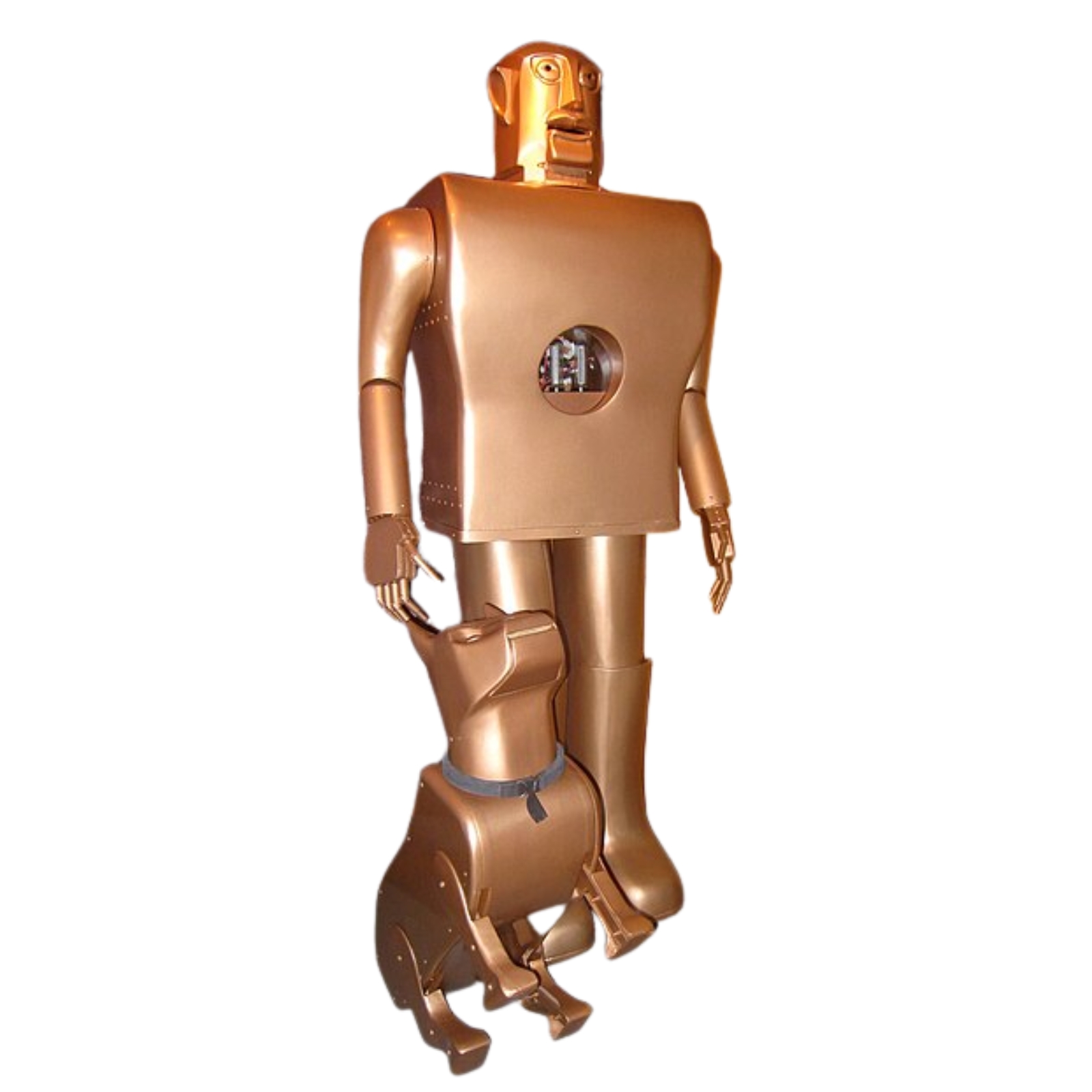
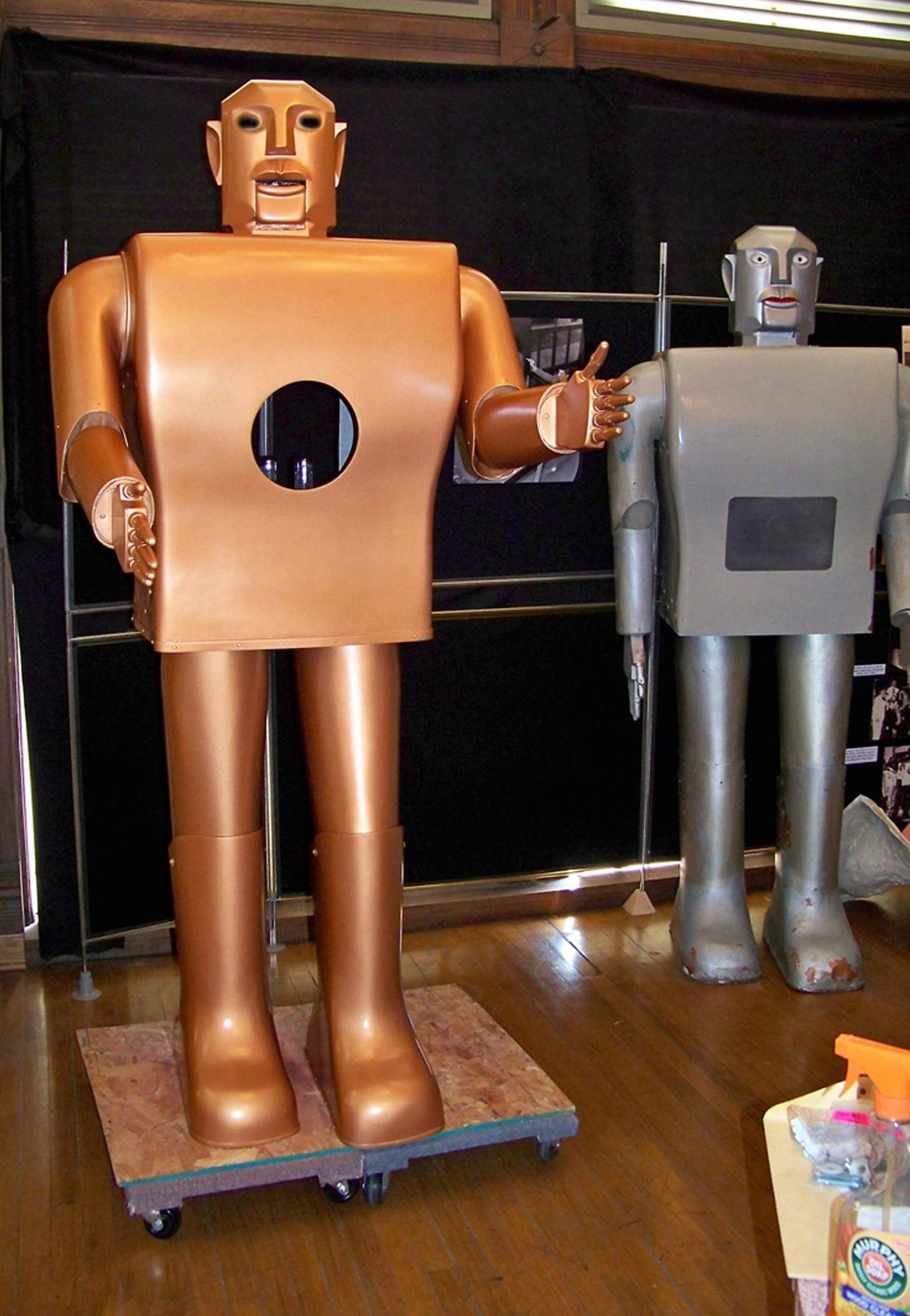
Westinghouse · Humanoid · 1939
Elektro, built by Westinghouse in 1937-39 and starring at the 1939 New York World's Fair, is one of the most famous early humanoid robots — a 2.1-metre (7-foot), ~120 kg gold-finished machine that captured the public imagination decades before modern robotics. Driven by electric motors, relays and photoelectric cells, it could walk on command (triggered by voice through a telephone-style link that converted words to relay pulses), speak a roughly 700-word vocabulary played from 78-rpm records, move its arms and head, count on its fingers, distinguish red and green light via photocells, and even 'smoke' a cigarette. It appeared with a robot dog, Sparko. Though it was a showcase automaton rather than an autonomous robot, Elektro is a landmark in the cultural and engineering history of humanoids. NOTE: historic entry from museum/historical record — verified capabilities and approximate dimensions; predates any datasheet by decades.
Price on application
View full interactive profile, comparisons & videos →| Category | Humanoid |
| Sub-type | Historical Exhibition Robot (1939) |
| Status | Active |
| Year | 1939 |
| Origin | USA |
| Announced | 1939 |
| Released | 1939 |
| Weight | 120 kg |
| Frame | Steel gear/cam/motor skeleton with aluminium skin |
| Camera | Photoelectric 'eyes' (distinguish red/green light) |
| AI model | Voice-command control (impulses via telephone relays); ~700-word speech via 78-rpm record player |
| Actuator type | Steel gear/cam/motor skeleton under aluminum skin; motors + telephone relays; voice-command control via impulses |
| Use cases | World's Fair exhibition, Museum / heritage |
| Made in | USA |