Waseda University · Humanoid · 1973
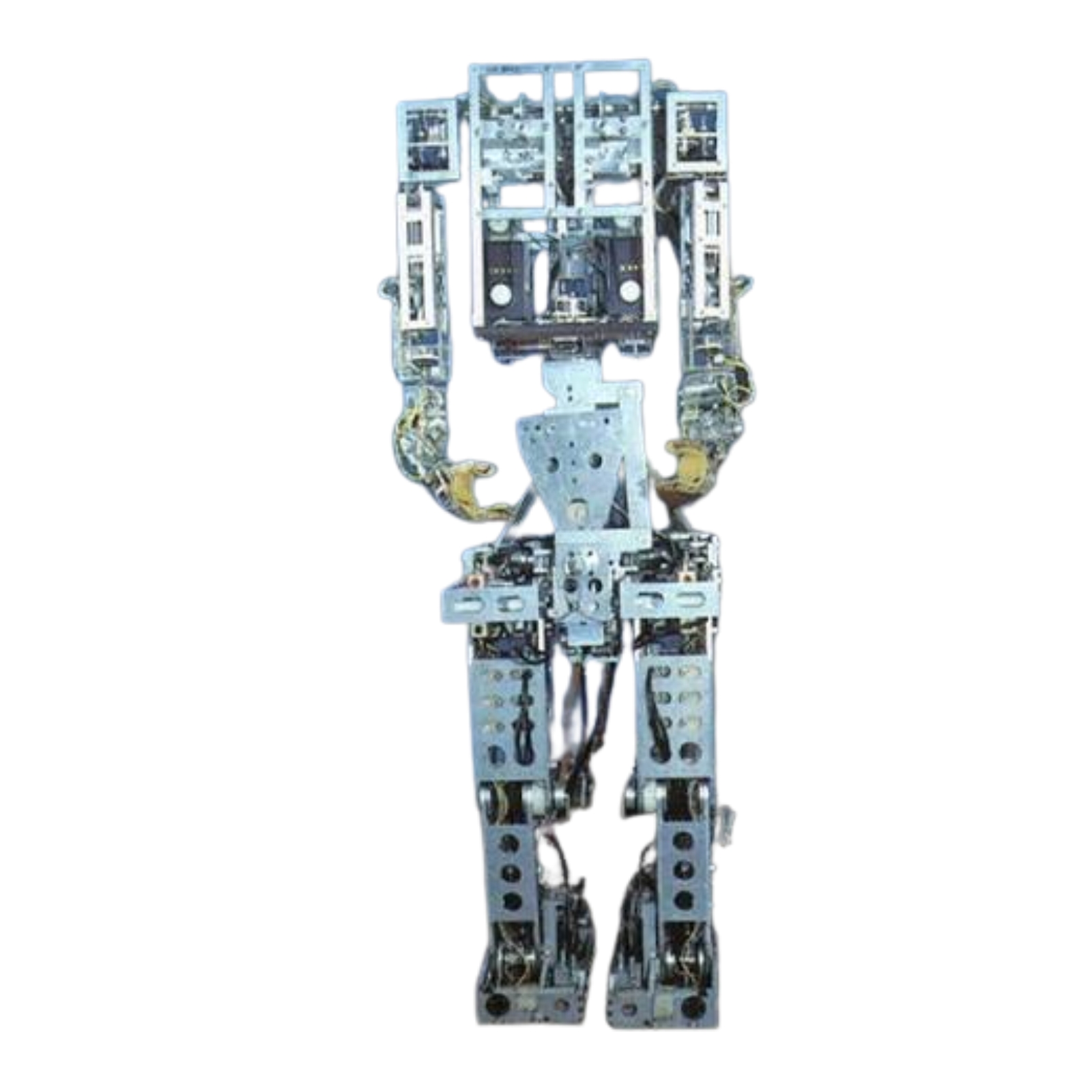
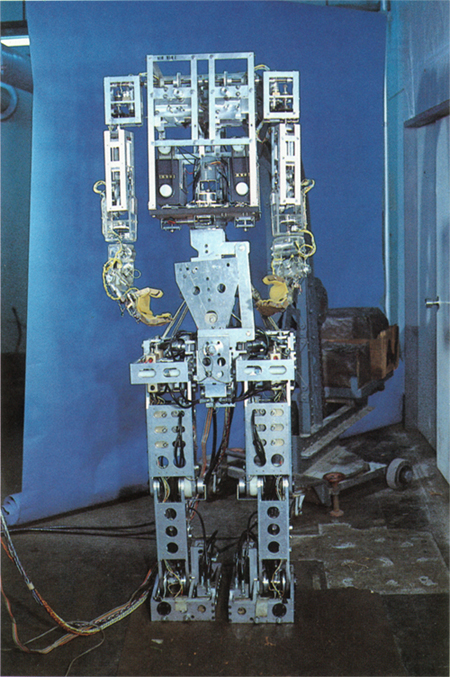
WABOT-1, completed in 1973 at Waseda University under Professor Ichiro Kato ('father of Japanese robotics'), is recognised as the world's first full-scale anthropomorphic (humanoid) robot — the machine that began the entire quest to build robots in human form. It integrated, for the first time in one platform, quasi-static bipedal walking (keeping its centre of mass inside the support polygon), object grasping and transport with human-finger-mimicking hands, a stereo-camera vision system that measured distance and direction to objects, and a conversation system that recognised and responded to simple spoken Japanese through an artificial voice. Researchers compared its overall ability to that of a 1½-year-old child. Hydraulically driven and slow, it could only walk on flat surfaces — but it proved humanoid robots were possible and jump-started the field worldwide. It's on public display at Waseda's Nishi-Waseda campus. NOTE: historic entry from Waseda archives and academic record — verified capabilities, exact mass/height not consistently published (flagged, not invented).
Price on application
View full interactive profile, comparisons & videos →| Category | Humanoid |
| Sub-type | World's First Full-Scale Humanoid (historical) |
| Status | Active |
| Year | 1973 |
| Origin | Japan |
| Announced | 1973 |
| Released | 1973 |
| Weight | 100 kg |
| Frame | Aluminum + plastic shell |
| Degrees of freedom | 26 |
| Camera | Artificial eyes (distance/direction) |
| AI model | Limb-control system + vision system + conversation system; communicates simple Japanese via artificial mouth/voice; ~1.5-year-old mental faculty (estimated) |
| Actuator type | Hydraulic drive system; tactile-sensor hands; integrated limb-control + vision + conversation systems |
| Use cases | Historic research milestone, Pioneering bipedal walking + vision + speech |
| Made in | Japan |
