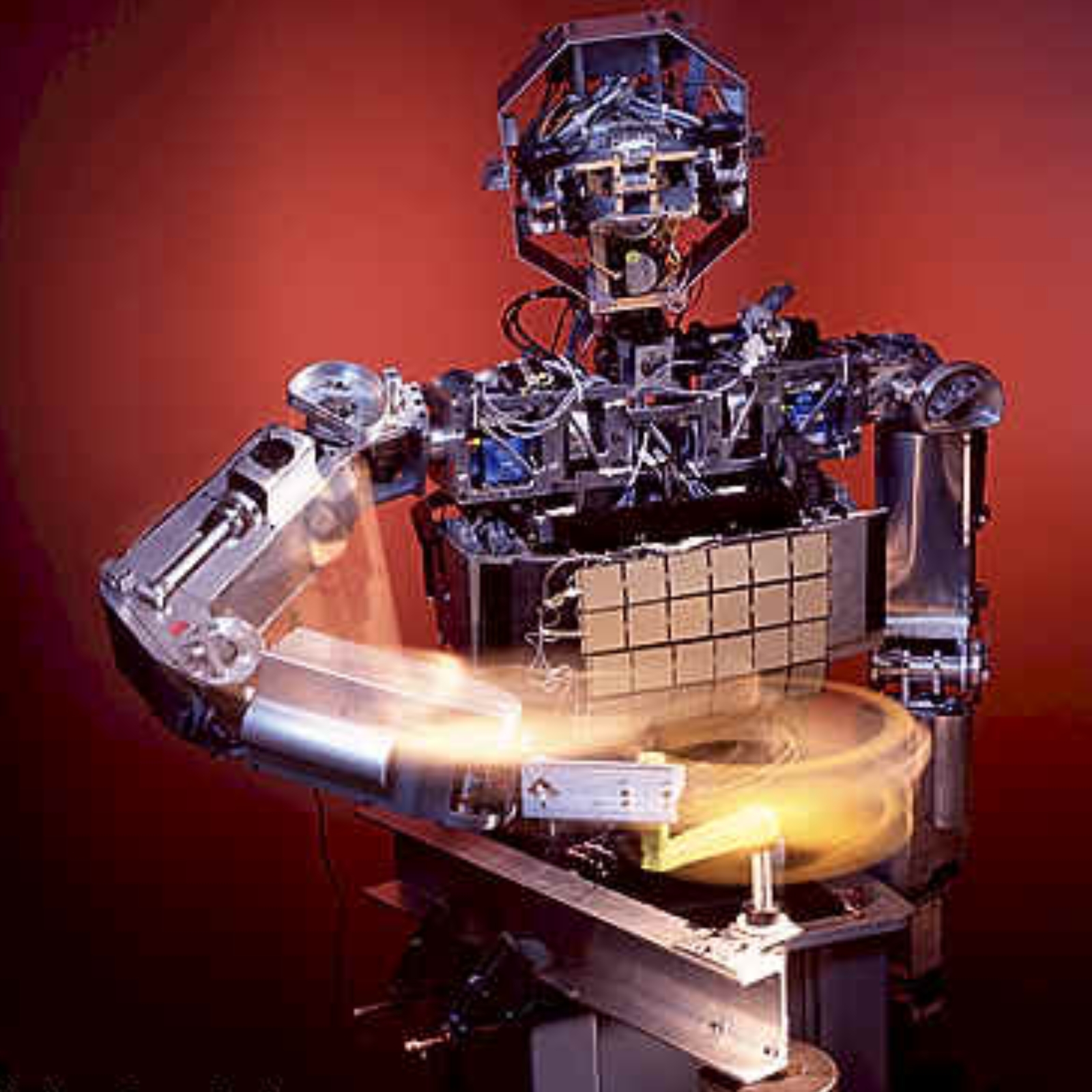
MIT AI Lab · Humanoid · 1994
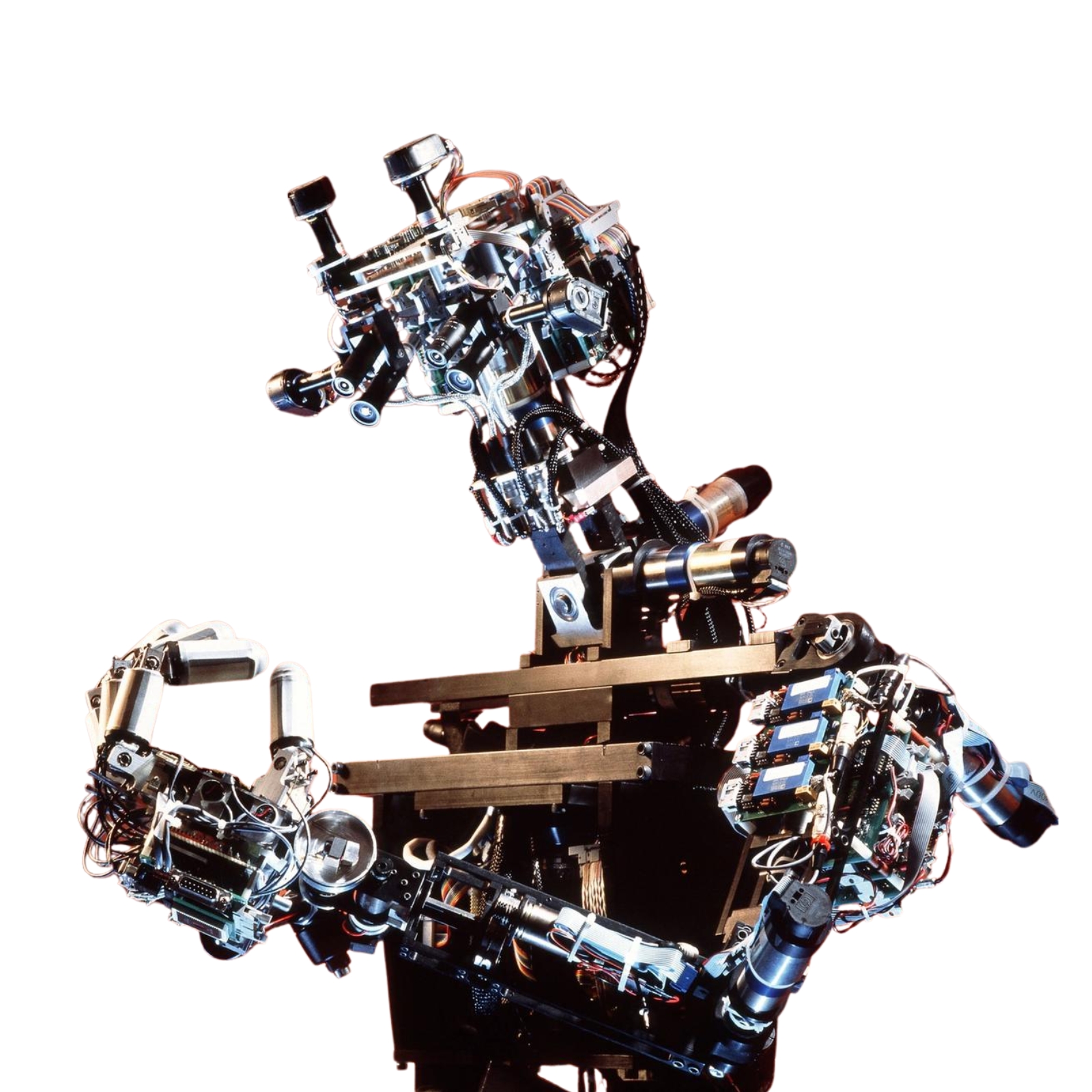
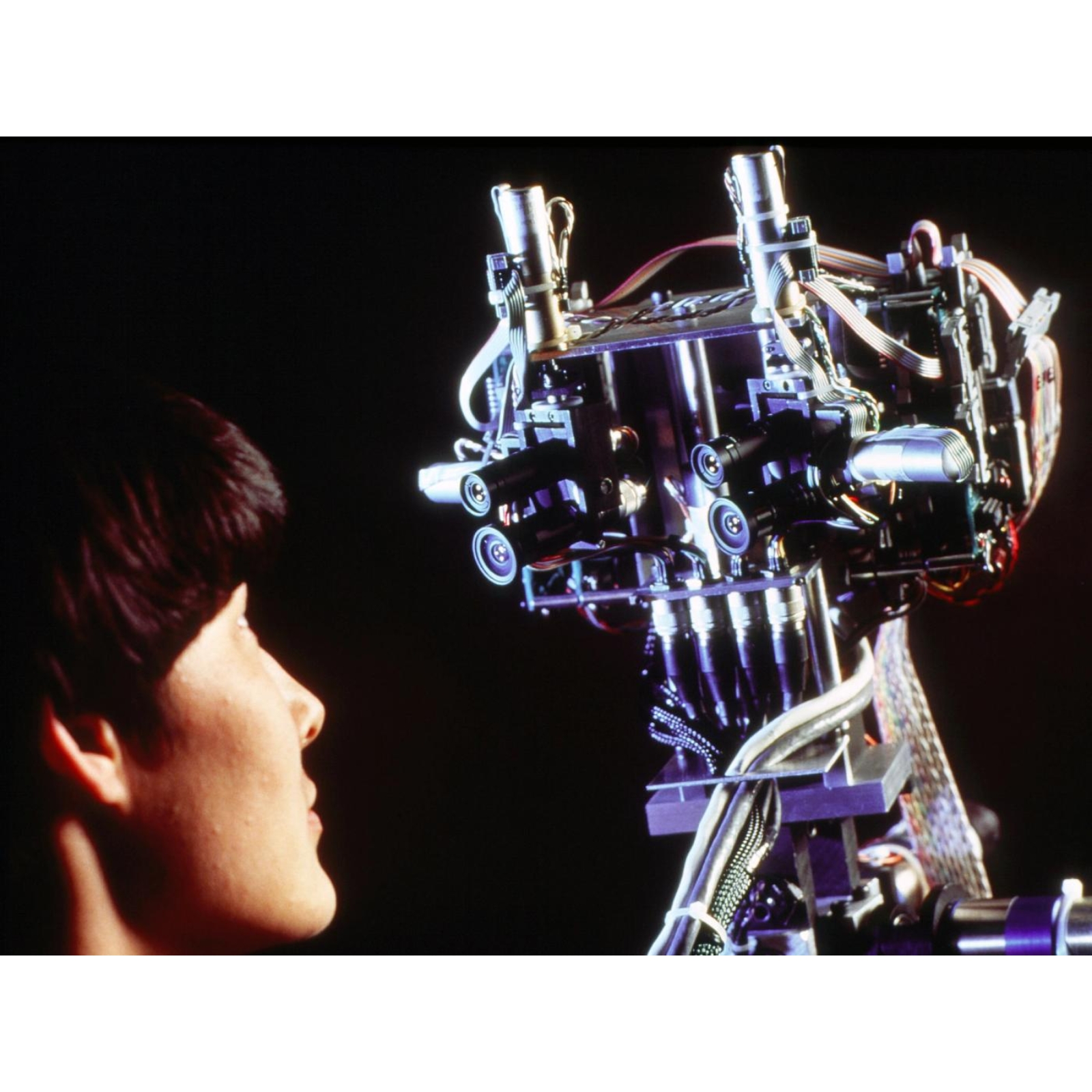
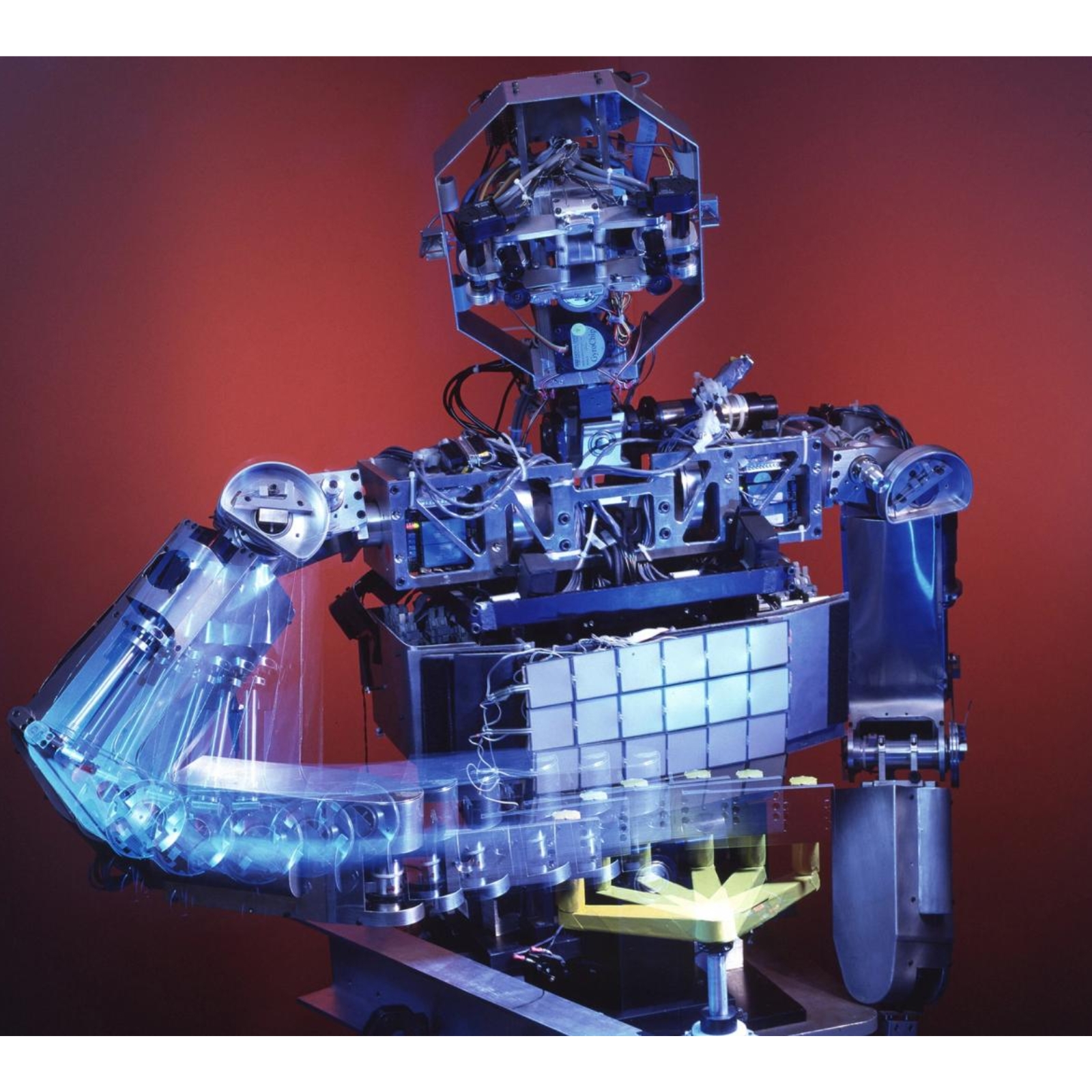
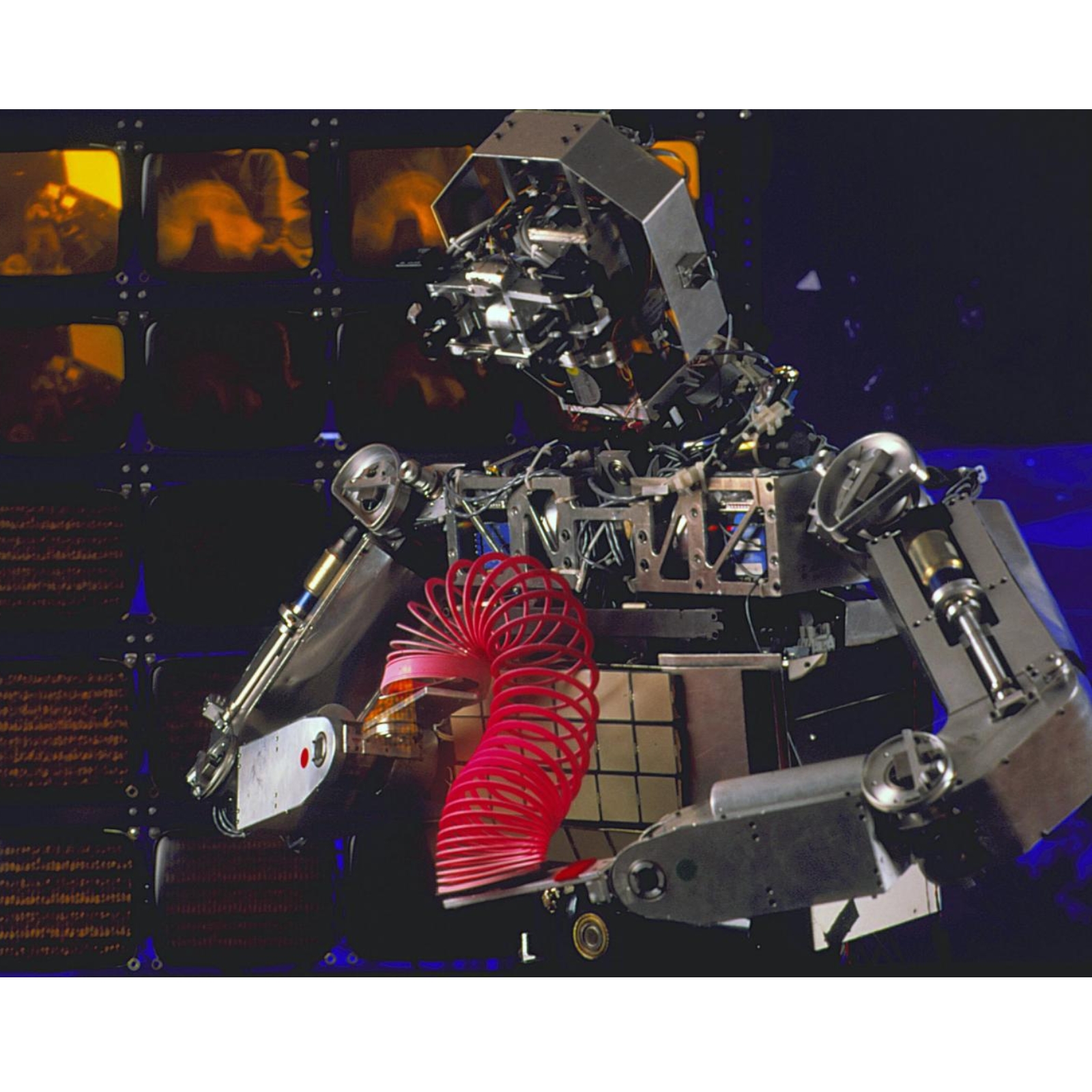
Cog was a landmark embodied-AI research humanoid built by Rodney Brooks's group at the MIT AI Lab from 1994 — an upper-body robot (torso, head, two arms; ~22 DOF on a fixed base) created to test a radical hypothesis: that human-like intelligence can only emerge from a human-like body interacting with the world, not from disembodied computation. Cog had foveated saccading stereo-camera eyes, vestibular and auditory sensing, and joint force sensing (an early platform for series-elastic actuation), and it learned behaviours like reaching, orienting to stimuli and rudimentary social interaction. It was hugely influential — a training ground for researchers including Cynthia Breazeal (who built the expressive robot Kismet nearby) — and shaped the embodied-cognition and social-robotics movements. Notably, Brooks went on to co-found iRobot and later Rethink Robotics (Baxter/Sawyer). NOTE: historic research entry from MIT records — verified specifics; some exact figures (mass, precise DOF by generation) vary and are flagged, not invented.
Price on application
View full interactive profile, comparisons & videos →| Category | Humanoid |
| Sub-type | Upper-Torso Cognition Research Robot |
| Status | Active |
| Year | 1994 |
| Origin | USA |
| Announced | 1994 |
| Released | 1994 |
| Degrees of freedom | 21 |
| Camera | Stereo cameras (narrow + wide FOV per eye) |
| AI model | Behavior-based / developmental cognition (Brooks); visual-motor routines (saccades, smooth-pursuit, binocular vergence, vestibular-ocular + opto-kinetic reflexes); social behaviors (joint attention, pointing, imitation) |
| Actuator type | Series-Elastic Actuators (SEA - pioneered by Pratt & Williamson for Cog); compliant; upper-torso only (fixed pedestal base) |
| Use cases | Embodied-cognition research, Developmental robotics, HRI research |
| Made in | USA |