

INRIA / Poppy Project · Humanoid · 2014
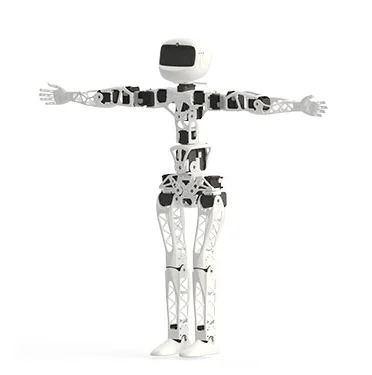
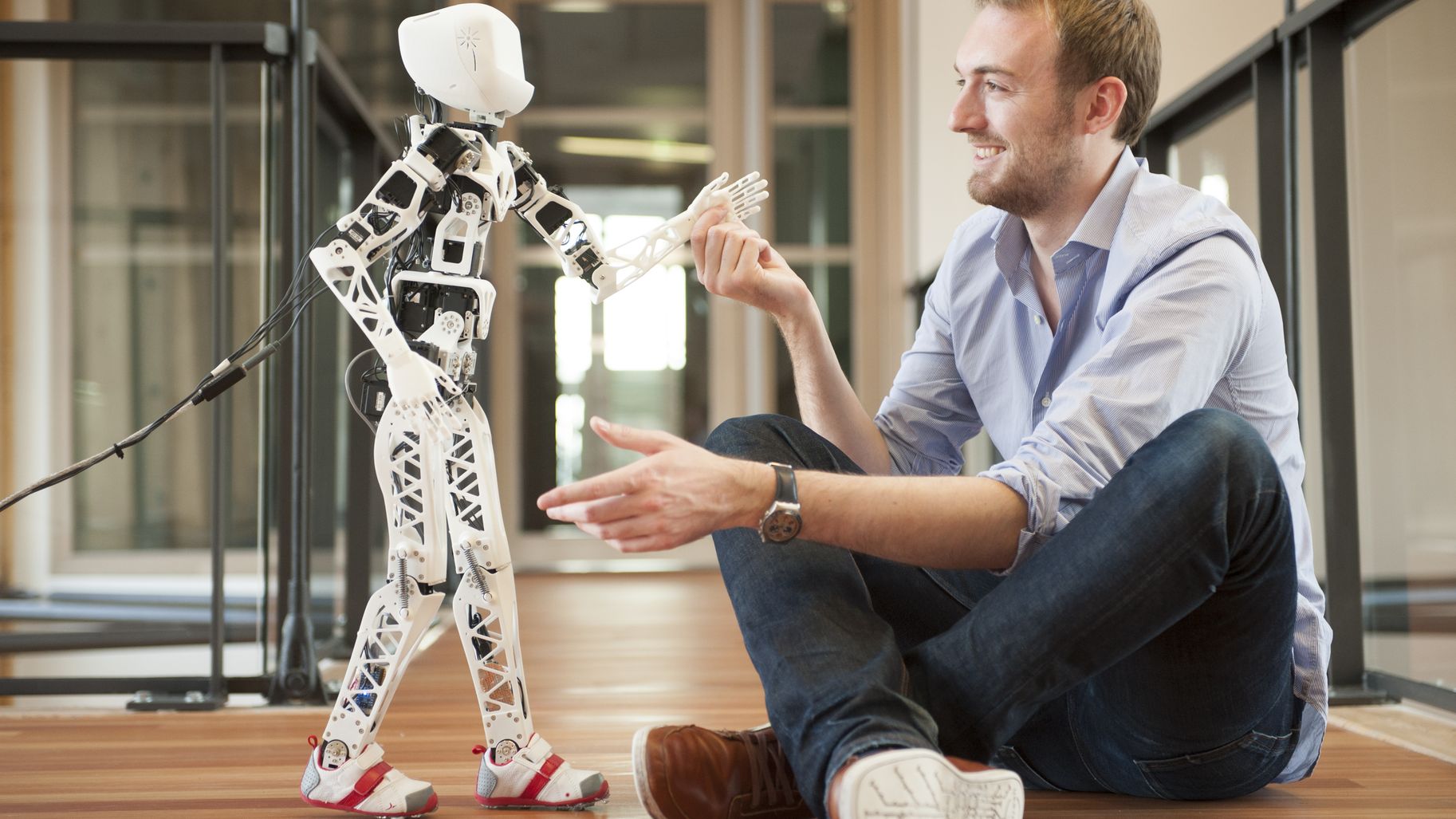
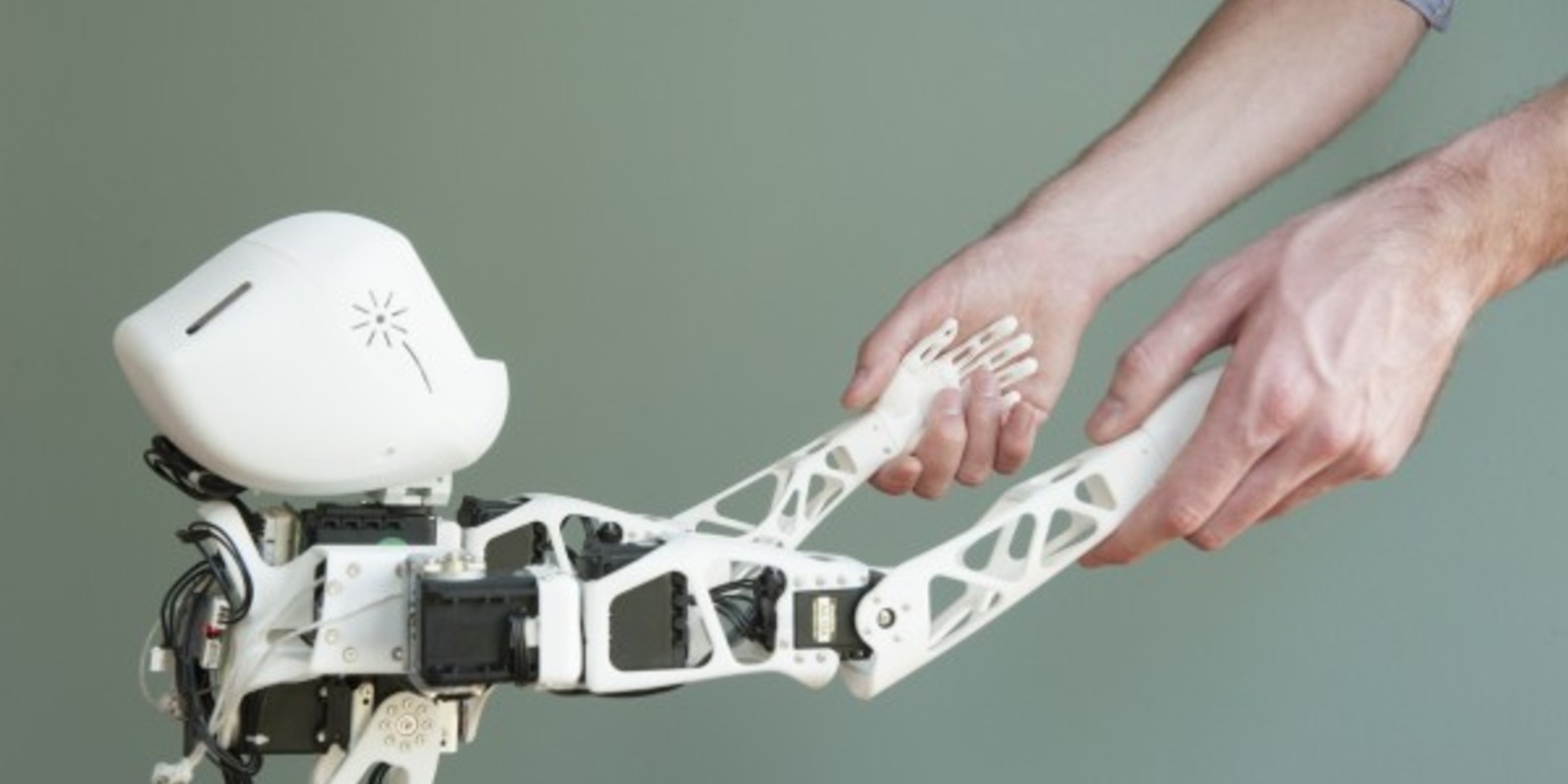
Poppy, created by INRIA's Flowers team in Bordeaux (born 2012 out of Matthieu Lapeyre's PhD under Pierre-Yves Oudeyer, funded by an ERC grant), is the first complete open-source, 3D-printed humanoid robot — a platform designed so scientists, students, engineers and artists can fast and flexibly explore robot morphologies. About 840 mm tall and only ~3.5 kg, it has 25 DOF driven by Robotis Dynamixel servos, including a distinctive 5-DOF articulated trunk that gives it lumbar-spine-like motion unusual among humanoids. Both hardware (Creative Commons, 3D-printed skeleton, Arduino/Raspberry-Pi electronics) and software (GPL, the Python PyPot library plus a Snap block-based web interface, with V-REP simulation) are fully open, so its mechanical design can be freely modified — it was even reproduced in a two-day workshop at a Paris science museum. Widely adopted in schools and universities across science, education and art, Poppy's compliant Dynamixel control enables soft, safe human-robot interaction. The team later spun out Pollen Robotics, creators of the Reachy open-source humanoid torso. NOTE: specs from INRIA/Poppy Project official + academic papers — museum-grade open-source sourcing (v1 figures; the platform is intentionally variable).
Price on application
View full interactive profile, comparisons & videos →| Category | Humanoid |
| Sub-type | Open-Source 3D-Printed Research Humanoid |
| Status | Active |
| Year | 2014 |
| Origin | France |
| Announced | 2012 |
| Released | 2014 |
| Weight | 3.5 kg |
| Frame | 3D-printed |
| Degrees of freedom | 25 |
| Operating system | PyPot (Python) + Snap web interface |
| Actuator type | ROBOTIS DYNAMIXEL |
| Use cases | Robotics research, STEM education / vocational training, Art installations, Embodiment & sensorimotor-learning research |
| Made in | France |
