

Clone Robotics · Humanoid · 2025
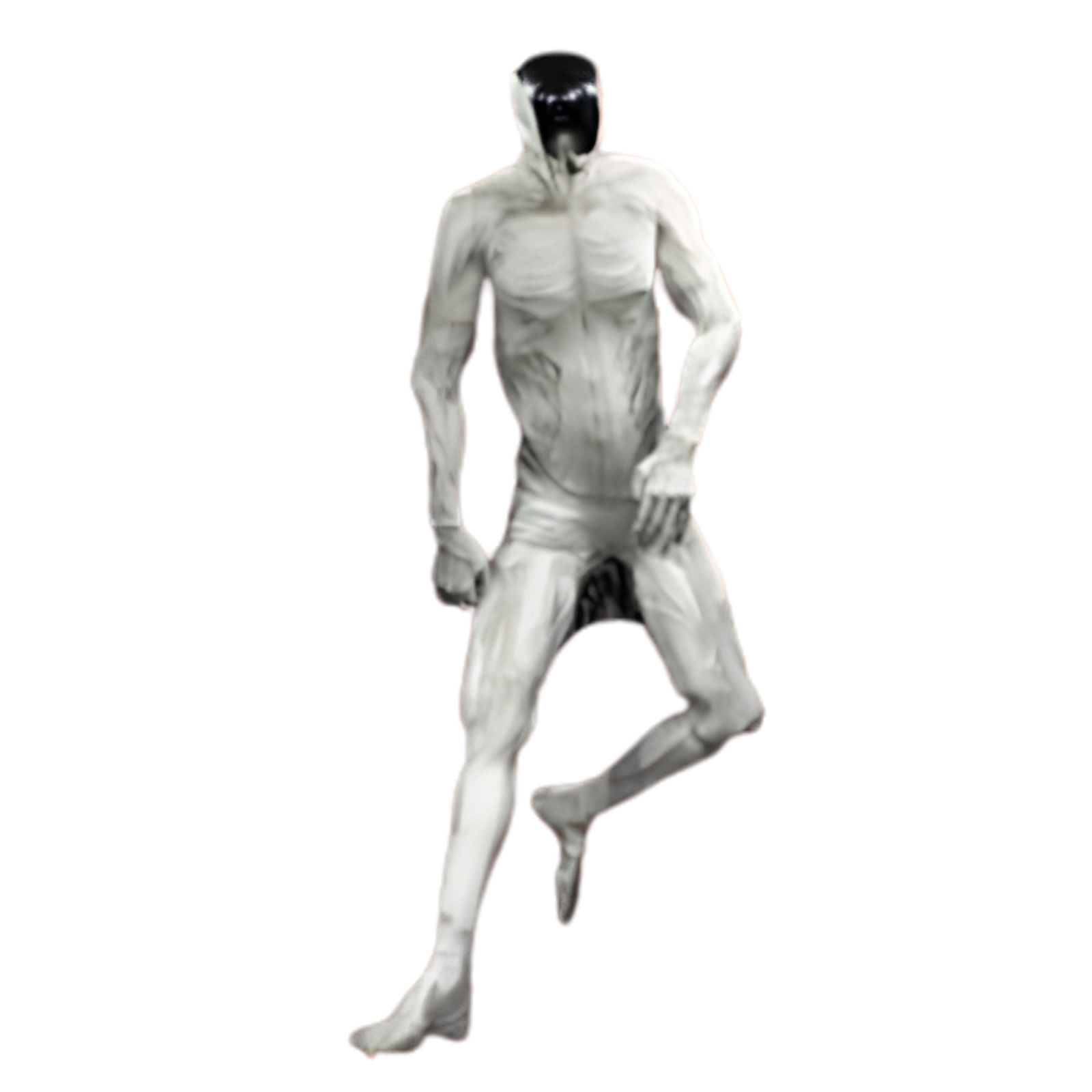
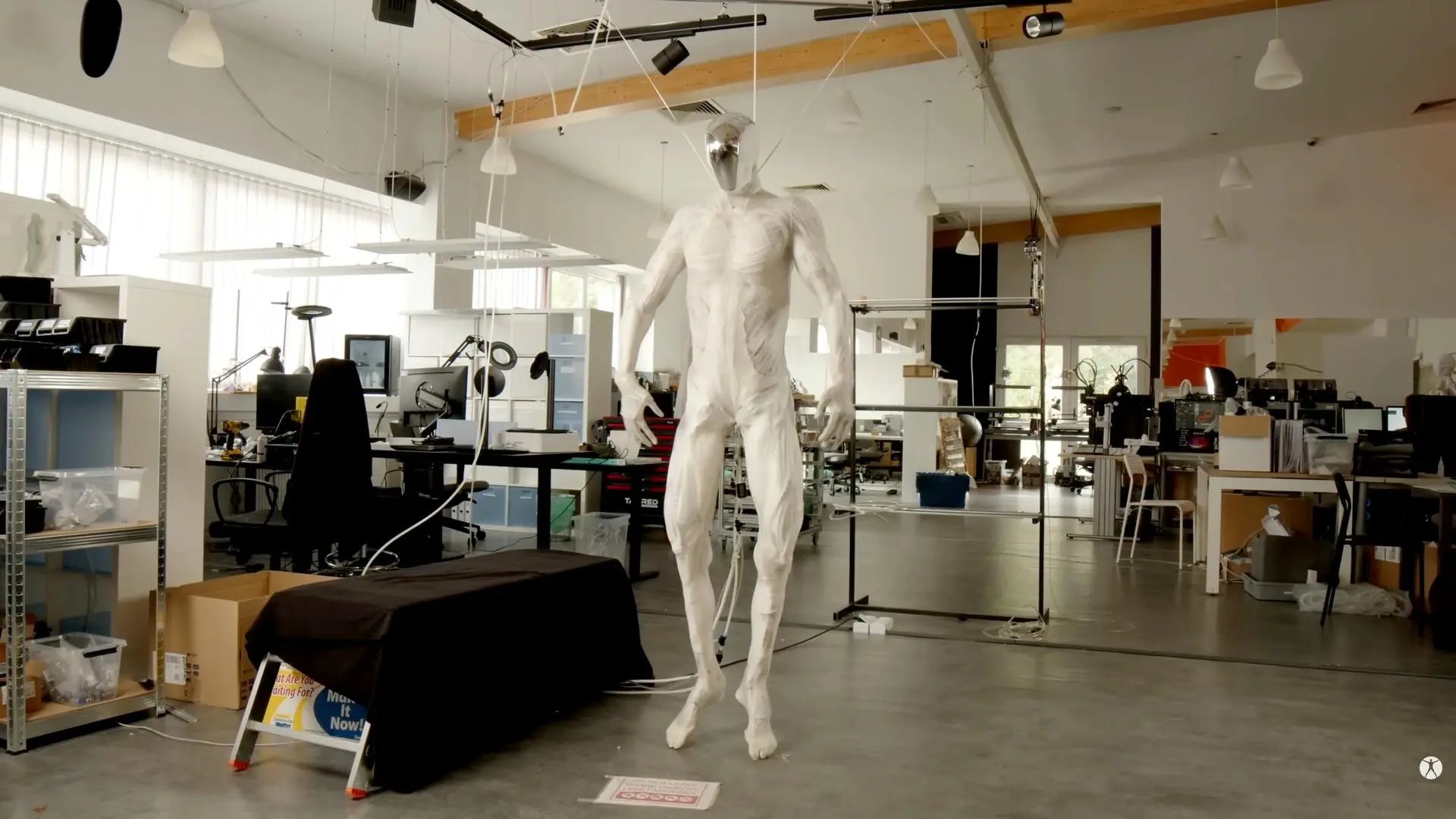
Protoclone V1, from Clone Robotics (Warsaw), is the viral research prototype behind the company's musculoskeletal approach — described by Clone as the world's first bipedal musculoskeletal android. It reproduces human skeletal, muscular, vascular and nervous systems with synthetic components: a biomimetic skeleton of 206 bones moved by around 1,000 water/pneumatically-actuated 'Myofiber' artificial muscles attached to precise bone points like tendons, with over 200 degrees of freedom and roughly 500 sensors (4 depth cameras, 70 inertial sensors, 320 pressure sensors). A 40-second early-2025 video of it suspended in a workshop, limbs twitching and flexing behind a reflective black mask, drew millions of views. The prototype currently uses pneumatics and is transitioning to hydraulics. IMPORTANT REALITY-FLAG: Protoclone cannot yet stand or walk on its own — it's an architecture demonstrator, not a functional walking robot; DOF and component counts are company claims. Conceptually comparable to the University of Tokyo JSK Lab's musculoskeletal Kengoro (2017), though Clone targets commercial use. Recorded as verified-manufacturer-claim with honest capability limits.
Price on application
View full interactive profile, comparisons & videos →| Category | Humanoid |
| Sub-type | Musculoskeletal Biomimetic Android |
| Status | Active |
| Year | 2025 |
| Origin | Poland / USA |
| Announced | 2025-02 |
| Released | 2025 |
| Weight | 35 kg |
| Degrees of freedom | 200 |
| Camera | Multiple cameras for vision and navigation |
| AI model | Sensor-driven real-time force/position control (biomimetic nervous system) |
| Operating system | Cybernet |
| Actuator type | 1,000+ Myofiber artificial muscles (fluid-driven mesh-tube actuators on a 206-bone polymer skeleton; <50 ms response, >30% contraction, ~1 kg force per 3 g fiber); pneumatic (moving to hydraulic) |
| Connectivity | Wi-Fi, Bluetooth |
| Use cases | Biomimetic robotics research, Musculoskeletal architecture demonstration, Artificial-muscle development |
| Made in | Poland (Warsaw) |
