

Northrop Grumman · Drones · 2011
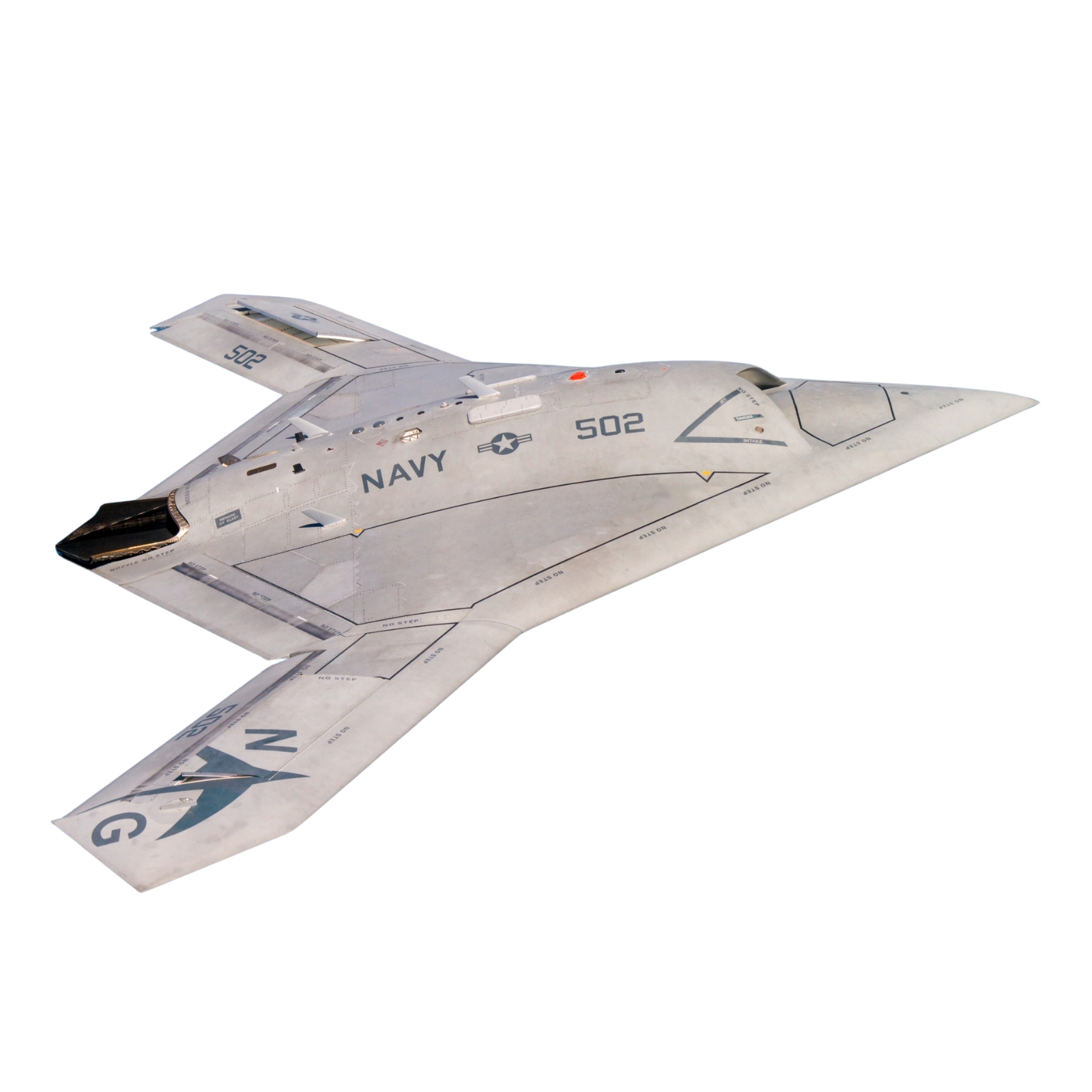
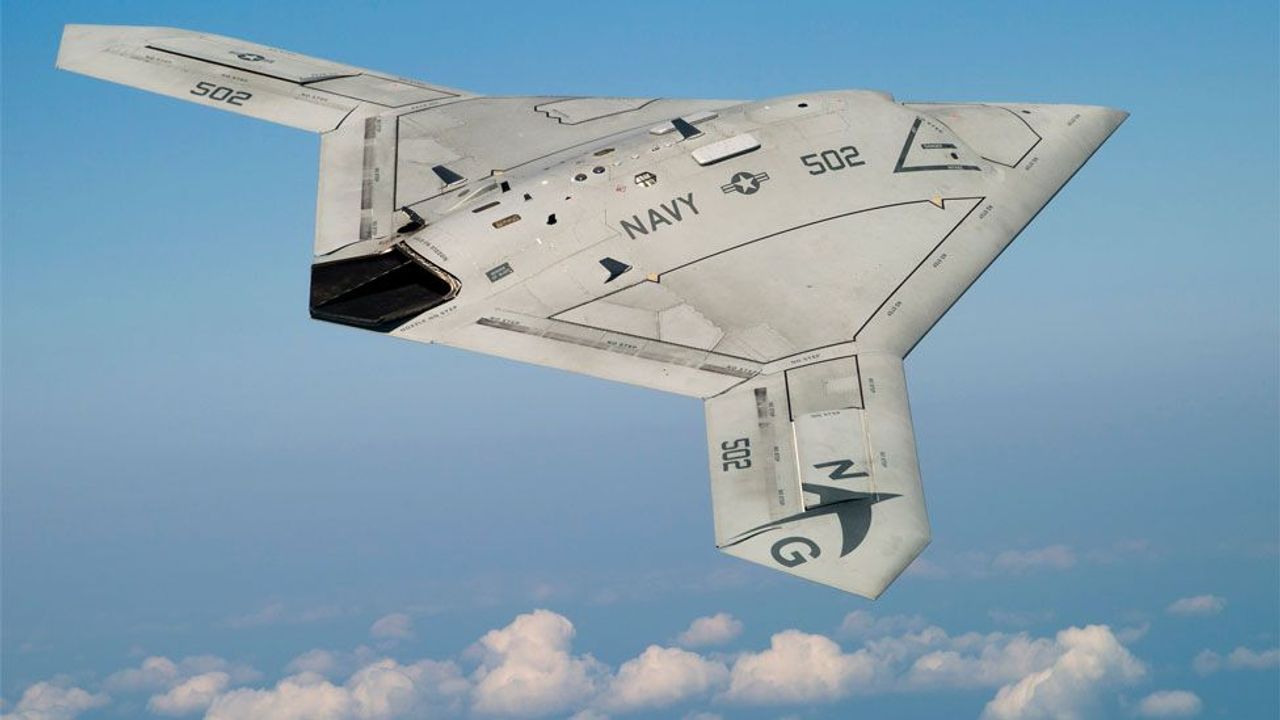
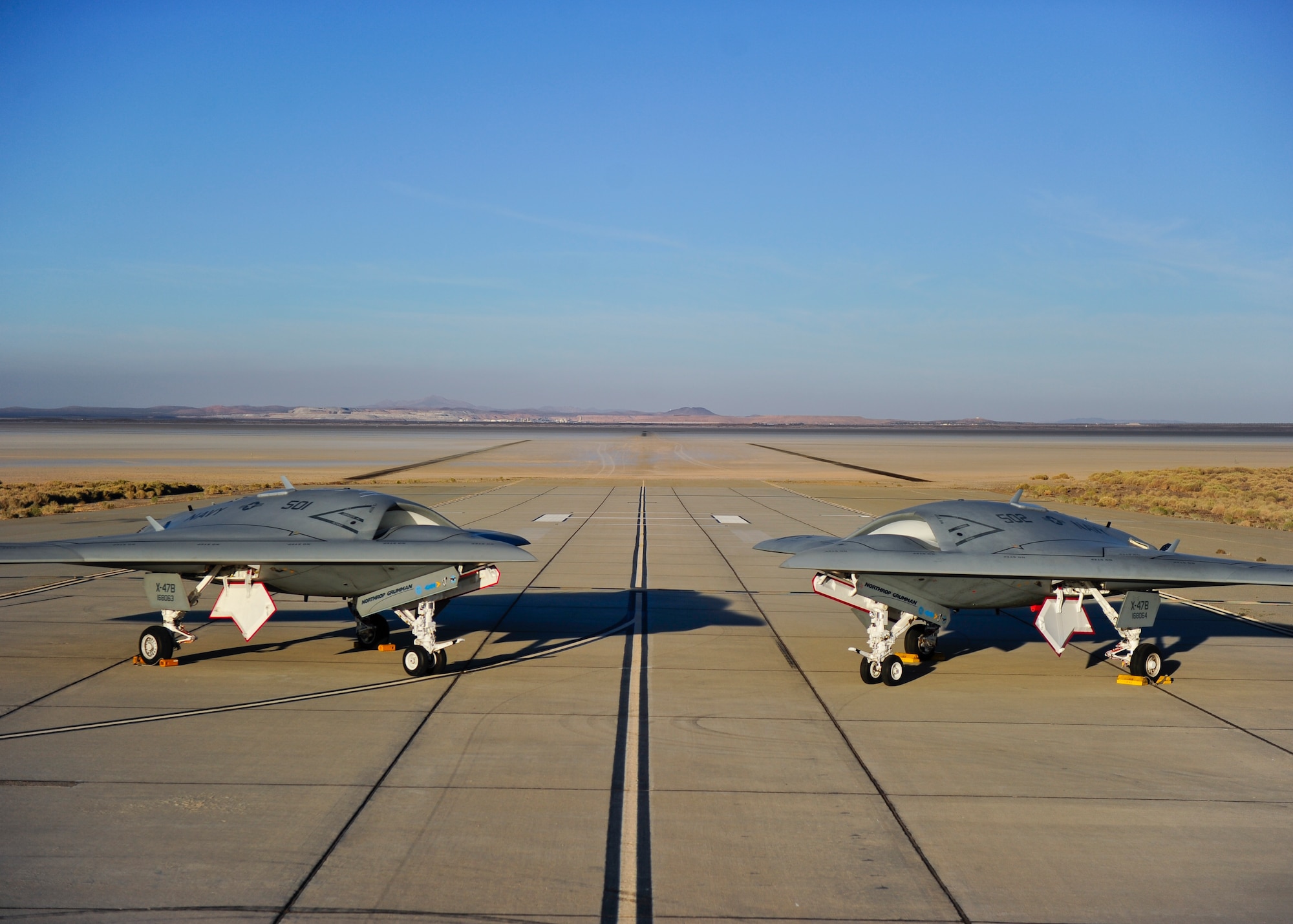
Northrop Grumman's carrier-based unmanned combat air vehicle technology demonstrator, built for the US Navy's UCAS-D program to prove that a stealthy, tailless jet could operate autonomously from an aircraft carrier. A B-2-inspired blended-wing-body flying wing powered by a single Pratt & Whitney F100-220U turbofan, it spans 18.9 m (folding to 9.4 m for the deck), is 11.6 m long, and has a ~20,185 kg max takeoff weight. It flew at high-subsonic speed (~Mach 0.9) out beyond 3,900 km at up to ~40,000 ft, with two internal bays rated for ~2,040 kg (the demonstrators flew unarmed) and EO/IR, SAR and ESM sensors under GPS/vision-based semi-autonomous control. Two were built (Salty Dog 501/502); first flight February 2011. It logged aviation firsts - the first UAV carrier catapult launch and autonomous arrested carrier landing (2013) and the first fully autonomous aerial refueling (2015) - before the test program concluded and it retired, serving as the basis for later carrier-UAV efforts (UCLASS/MQ-25).
Price on application
View full interactive profile, comparisons & videos → Check price on Amazon →| Category | Drones |
| Sub-type | Carrier UCAV Demonstrator (stealth flying-wing) |
| Status | Retired |
| Year | 2011 |
| Origin | USA |
| Weight | 20215 kg |
| Frame | Composite |
| Payload | 2040 kg |
| Max speed | ~Mach 0.9 (high subsonic) m/s |
| Max range | 3900 km |
| Navigation | GPS + vision (semi-autonomous) |
| Use cases | Carrier-based ISR / strike demonstration, Autonomous carrier operations |
| Made in | USA |
