AeroVironment · Drones · 2018
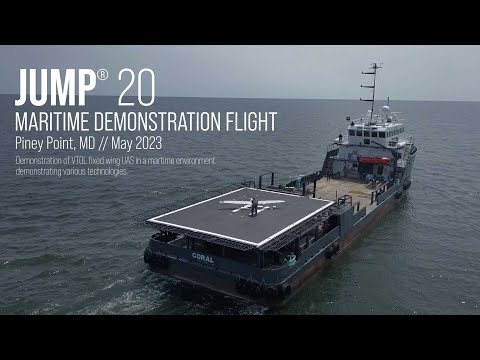
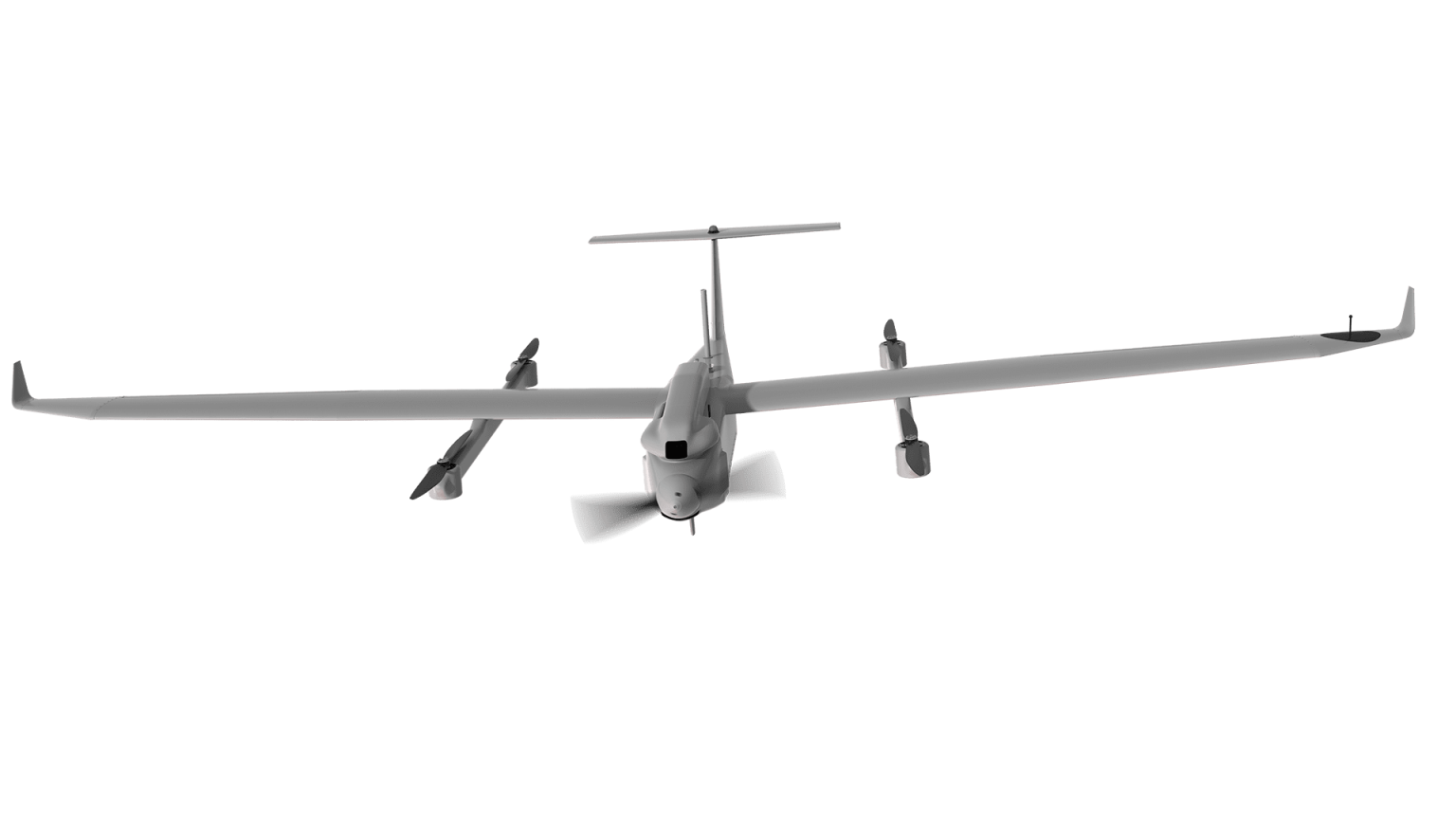
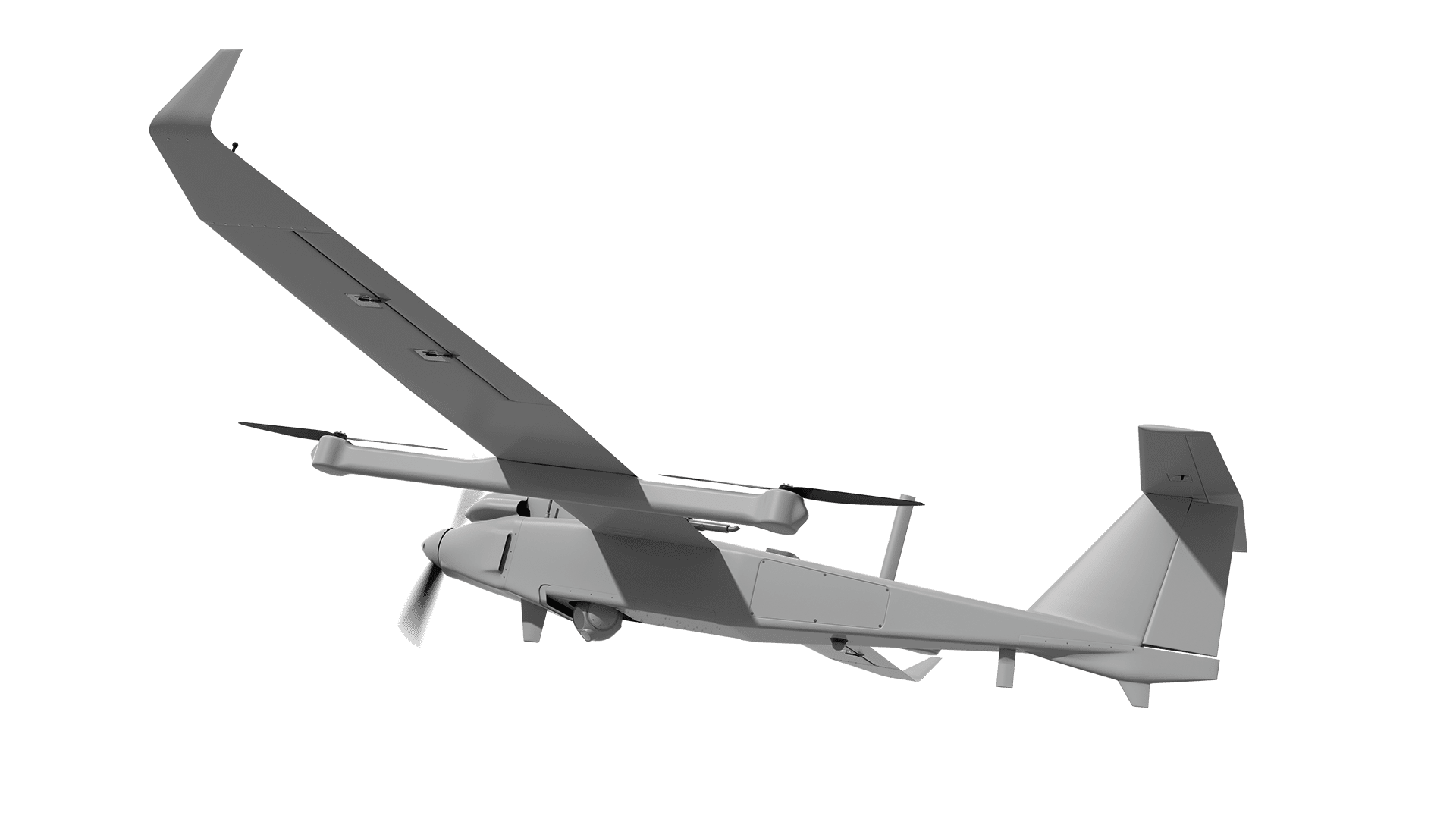
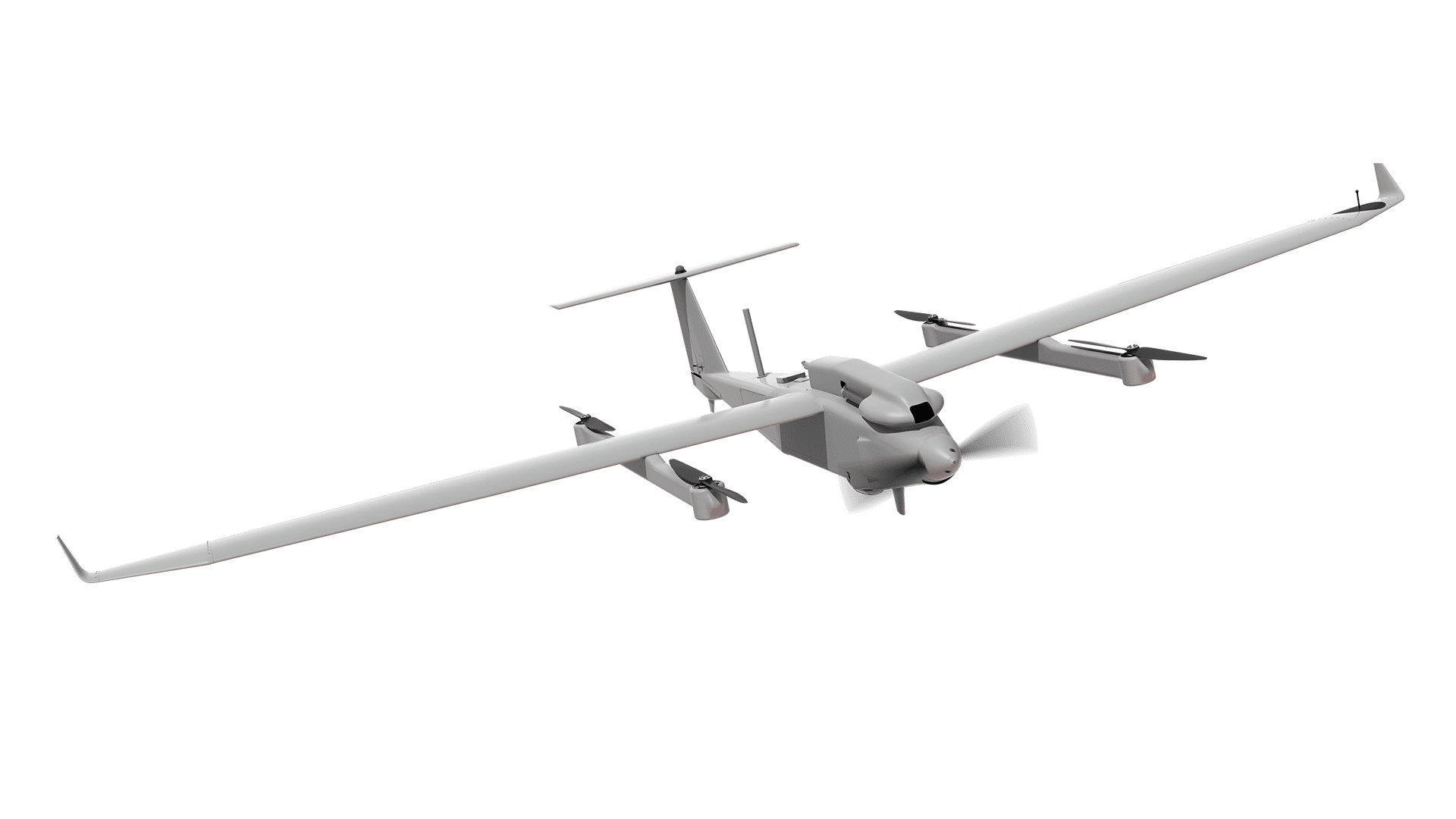
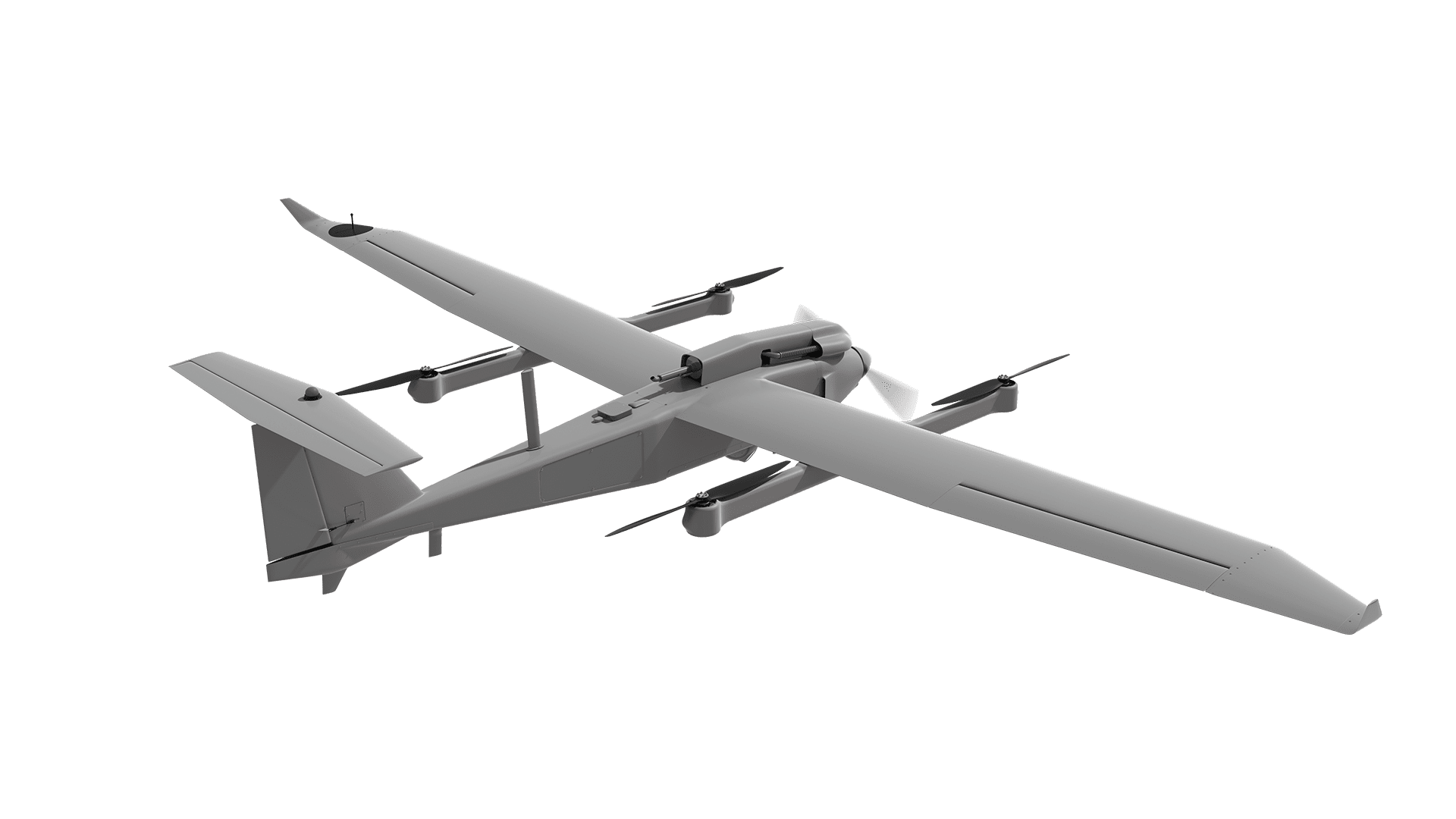
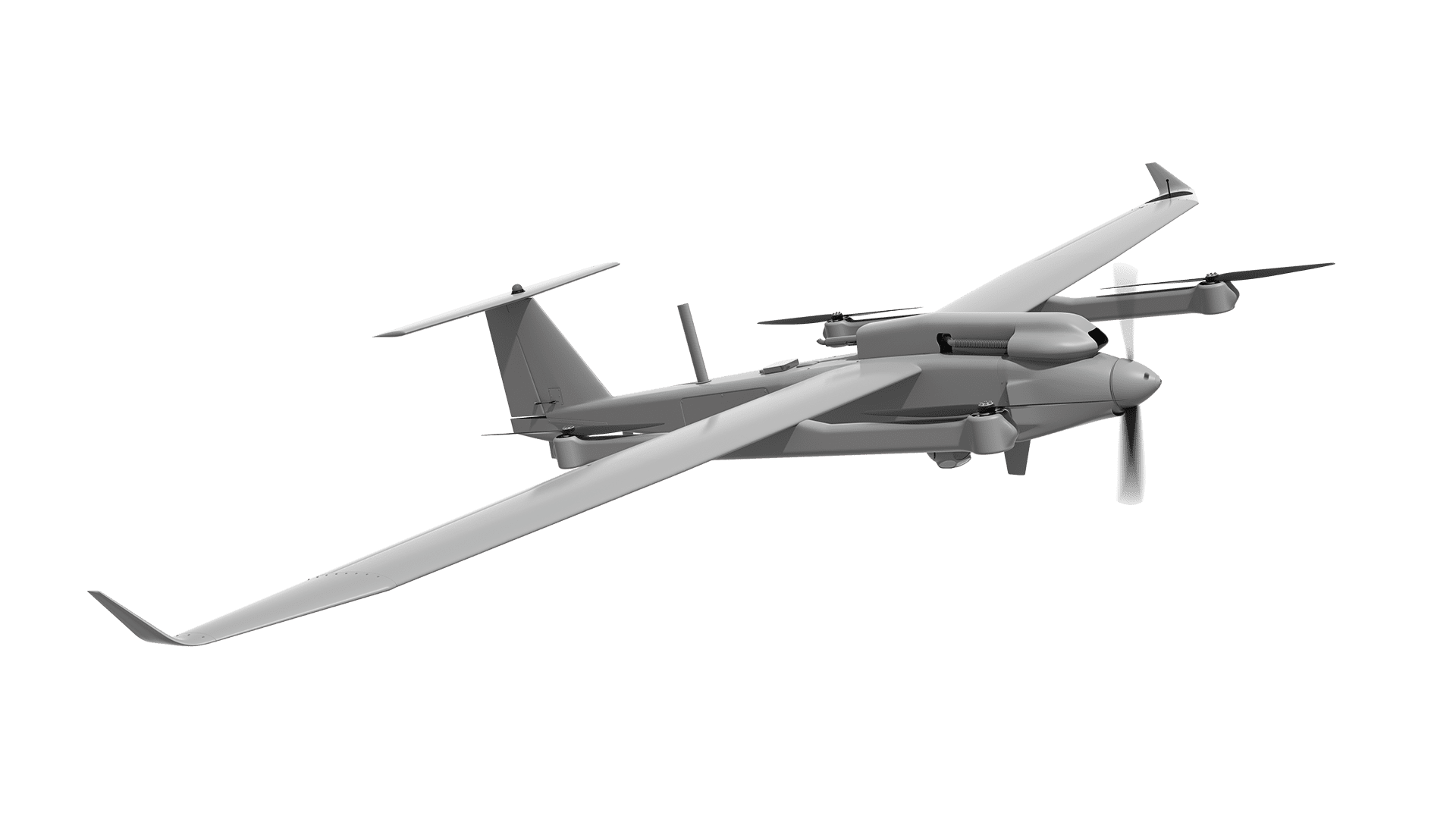
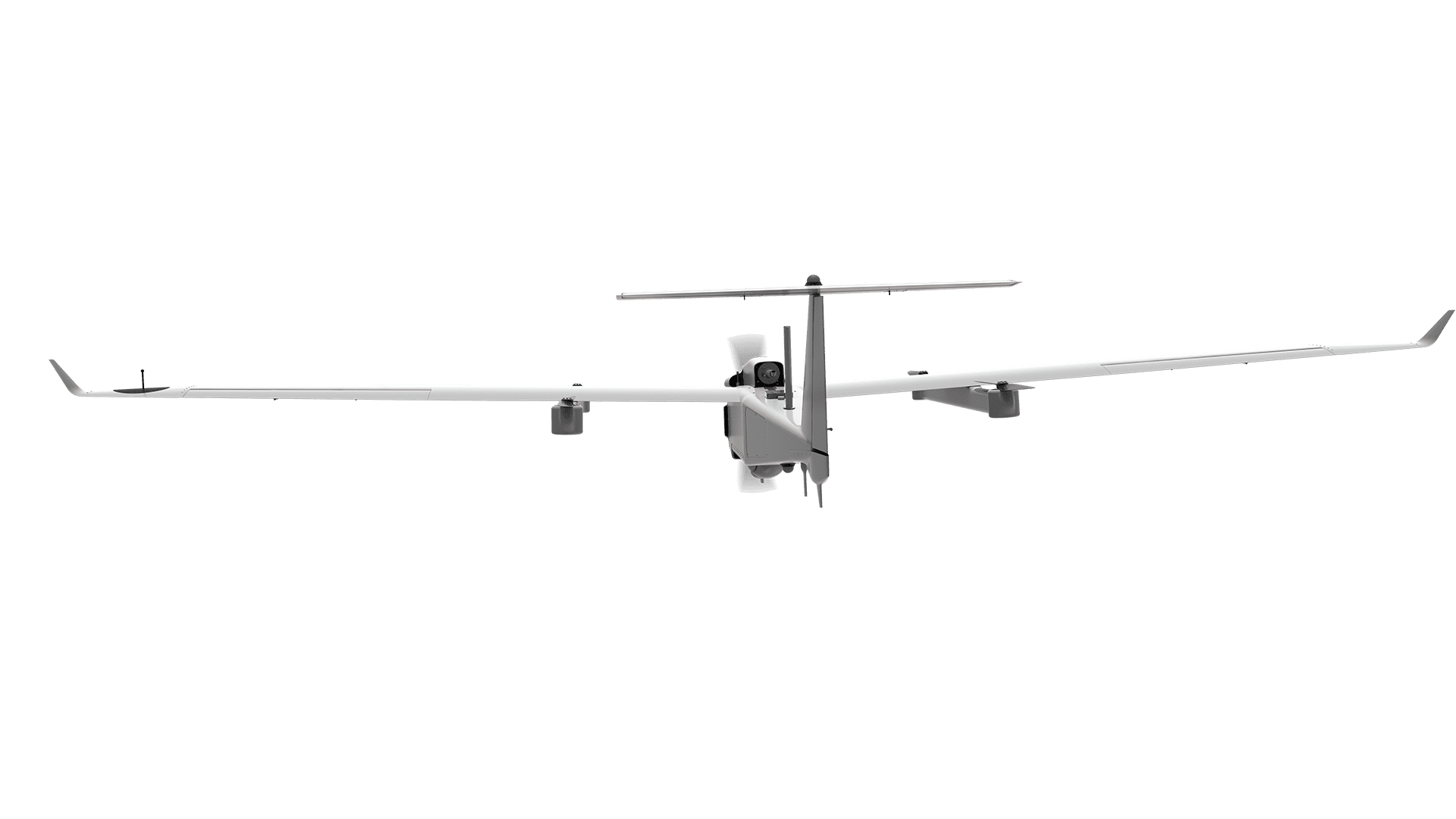
A runway-independent VTOL fixed-wing medium (Group 3) UAS for persistent multi-sensor ISR, derived from the Arcturus T-20 (AeroVironment acquired Arcturus in 2021). Four boom-mounted electric rotors handle vertical takeoff and landing while a heavy-fuel/MOGAS EFI engine drives efficient forward cruise, so it needs no runway or launcher and sets up in under 30-60 minutes with a two-person crew. It's 2.9 m long with a 5.7 m wingspan and ~97.5 kg max takeoff weight, carries up to 13.6 kg of payload (typically a gyro-stabilized EO/IR gimbal such as the TASE 400 series with onboard tracking), and delivers 13-14+ hours of endurance, a 185 km link range with BLOS capability, ~93 km/h cruise and a 17,000 ft ceiling. A Piccolo autopilot and modular open-systems (STANAG, payload/radio-agnostic) architecture make it highly configurable. The US Army picked it as FTUAS Increment 1 (2022, replacing the RQ-7 Shadow); it also serves Taiwan's Coast Guard, Mexico's Navy and Ukraine. A marinized JUMP 20-X variant adds autonomous shipboard operations.
Price on application
View full interactive profile, comparisons & videos → Check price on Amazon →| Category | Drones |
| Sub-type | VTOL Fixed-Wing ISR UAS (Group 3) |
| Status | Active |
| Year | 2018 |
| Origin | USA |
| Weight | 97.5 kg |
| Payload | 13.6 kg |
| Max range | 185 km |
| Use cases | Persistent ISR, Border security, Maritime domain awareness, Target tracking |
| Made in | USA |